
Computational Molecular Biophysics Group
Wake Forest University · Department of Physics
We use molecular simulation, statistical analysis, and machine learning to understand how biomolecules move—and how those motions shape recognition, regulation, and disease.
From molecular motion to biological mechanism
The Salsbury Group develops and applies physics-based computational methods to proteins, nucleic acids, and small molecules. Our work connects atomistic molecular dynamics with rigorous statistical analysis to identify meaningful motions, allosteric communication, and molecular interactions.
We work at the boundary of molecular physics, biophysics, and data science, often in collaboration with experimental scientists. The goal is not simply to produce simulations, but to turn complex molecular trajectories into testable physical insight.
Molecular dynamics
Atomistic simulations of biomolecular structure, flexibility, interactions, and rare conformational change.
Allostery & regulation
How local binding or mutation reshapes communication across proteins and molecular complexes.
Data-driven biophysics
Statistical and machine-learning approaches for separating robust signals from high-dimensional simulation data.
Molecular discovery
Computational studies that support drug discovery and mechanistic questions in cancer and other diseases.
A collaborative group
Physics, computation, and biology in conversation
Our projects bring together quantitative modeling and experimental context. We contribute computational expertise to interdisciplinary research and train students to build careful, reproducible analyses.
For students, researchers, and collaborators
Join
People & opportunities
Learn about the group's leadership, training environment, and current public recruiting status.
Collaborate
Structural biology & drug discovery
See how computational modeling and simulation connect with the Cancer Center's Shared Resource.
Plan
Graduate & pre-health advising
Find official Wake Forest resources and prepare for an advising conversation.
Editorial leadership
Journal of Biomolecular Structure and Dynamics
Learn about JBSD's scope and Freddie Salsbury's service as Editor-in-Chief.
Latest updates
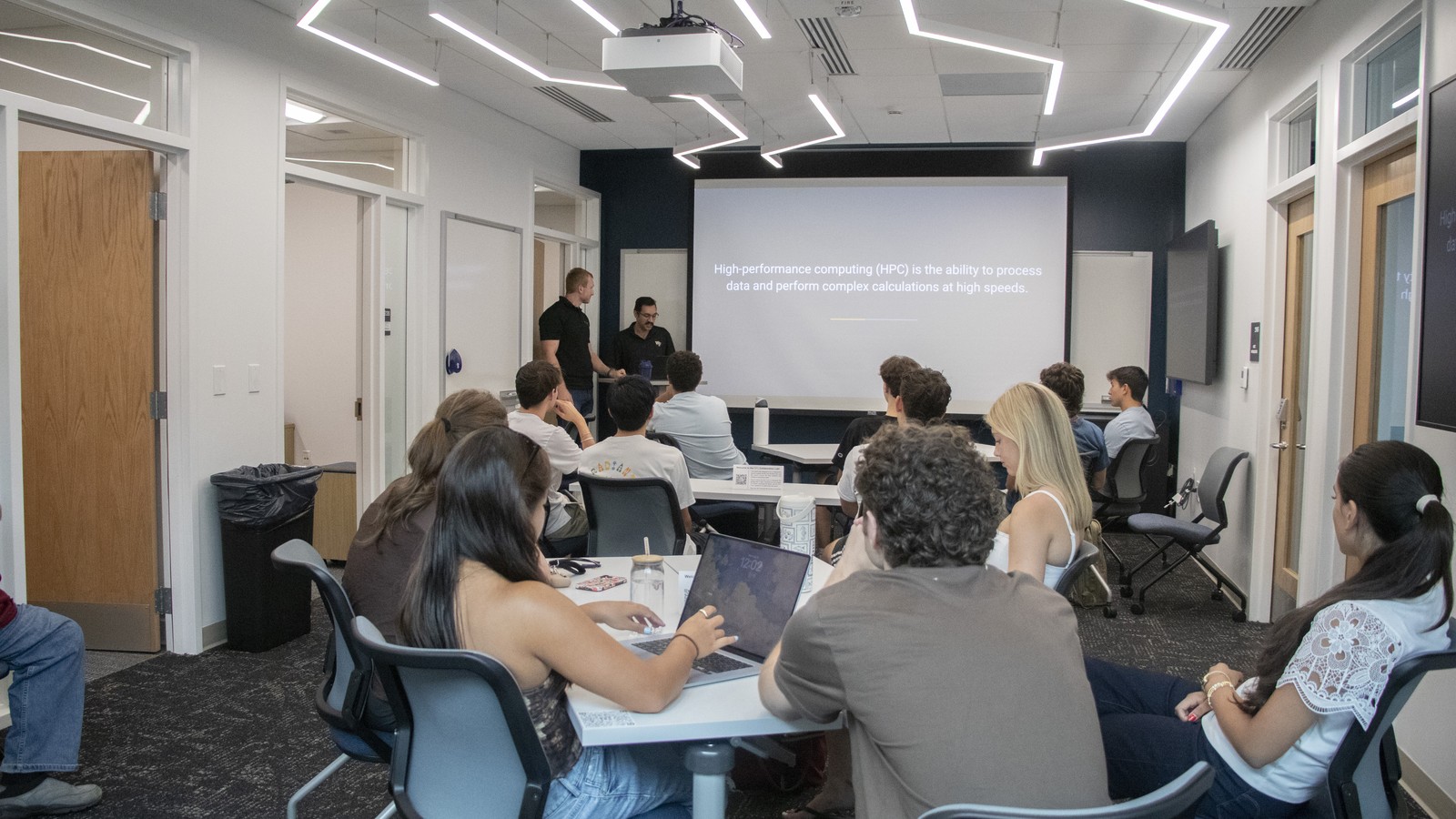
FYS 100 Visits Wake Forest's High-Performance Computing Center
FYS 100 students visited Wake Forest's HPC touchdown space and data center to connect AlphaFold and molecular modeling with the machines that run large calculations.

Published: NSP2 mutation stabilizes a rare C-terminal conformation
A collaborative study combines X-ray crystallography and molecular dynamics to examine how the K294E change alters the conformational preferences of rotavirus NSP2.

Published: amidation changes Aβ25–35 aggregation
Molecular dynamics simulations examine how C-terminal amidation changes the secondary structure and chain organization of Aβ25–35 assemblies.